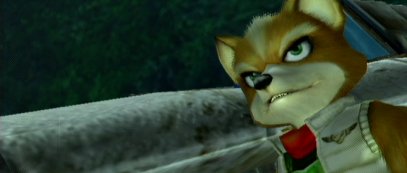
I started my first full time job in animation and, along with another person starting the same day (later to become a close friend of mine), we found ourselves being taken into a large room with a cinema screen high up on one wall. We were sat down and told we’re about to see what we’re going to be making for the next six months. What we saw was (for its time) a very impressive action adventure role playing game filled with characters and cut-scenes (FMVs or cinematics as many prefer to refer to them).

It was my first day at Rare, a 200 strong, growing company with a very strong pedigree working under Nintendo’s wing. My friend and I were given an outline of what we’d be expected to start working on. He was a software engineer so we weren’t going to be doing the same things but we were going to be working together a lot. I was fully prepared to be doing in-game cycles, when the Director turned to me and casually told me I’d be making the cutscenes. I forget now if it was verbal, but I know that in my mind I went “Wahoooooo!”. It was more than most people could expect for their first job. I felt then, and now, that it was an incredible opportunity and I was very lucky. I guess all that hard work on my
student short film must have paid off!
The game was about as story and character heavy as you could get at the time for the games industry, so I off to a great start. What’s more this wasn’t a company filled with story writers or filmmakers, even character development was in it’s infancy. We were aiming to make this game for the Nintendo 64 at the time so expectations weren’t high in those areas. So I found myself becoming incredibly valuable to the team, almost instantly taking over all the cinematics for the game. I wasn’t writing the scripts but I was creating sequences from script (and dialog performance) to screen, which gave me a lot of scope with which to play filmmaker.
That six month project grew and grew until it consumed three and a half years of my life! It turned out there were problems with this dream job, but that’s another story. What came out of it was an opportunity for me to create hours and hours worth of sequences with a wide variety of subject matter, characters and moods. I was working with dinosaurs, creatures, bipeds, quadrupeds, huge vista’s, tight caves, flight, stampedes, battles, puzzles, life, death, loss, jubilation, conflict and family. It was an epic start for a young animated filmmaker and presented me with so many opportunities to try things out.
That game completed with over two hours of cutscenes, all of which I’d been involved with (although a significant number where largely made by a friend of mine that joined the team for a couple of years). But I knew that there was more to it than that. Because of the troubles we faced over the years developing the game, I’d actually created in excess of, what I’m estimating, over ten hours of sequences! These were scenes that only my co-workers will ever have seen, and there are some firm favourites in there that I can still remember that will probably never be seen. I learned then just how much you have to iterate to get things to the screen. I learned to become less precious about the early stages of creating a sequence of shots and more open to change.
One thing I will say is that I wasn’t directed heavily at all during those years. Never since then have I had that much freedom, and you generally shouldn’t expect it... actually you don’t want it, as what you really want is a Director that knows what they want and teaches you as you go. In hindsight it was a valuable period of exploration, but I was self teaching which takes longer than being taught by a mentor. I didn’t have access to a library of films or books to look learn from, there was no internet or email to pass teaching around. It was all about trying things. I developed my own unique bag of filmmaking tricks to deal with things as I went along learning the slow way. I’d later find out these where known filmmaking rules. Of course I’d already read a good number of film making and cinematography books during my studies before i got the job, but there’s no substitute for practicing it yourself, and there’s no faster, cheaper and more immediate way to experiment than real-time game cinematics. What I was doing was effectively the precursor to today’s Machinema, and to top it off I had programmers bent on developing the tools for me to do an even better job and they were taking requests almost exclusively from me!
So what? I got off to a good start? Well yes but it was a small bubble too, and there was a lot I wasn’t learning about.
I moved onto
another game and this time focused most of my time on 25 minutes of pre-rendered cinematics, while supervising other animators to make the in-game animation and other real-time cutscenes. That was to be the next three years. Those 25 minutes were filled with a similar range of opportunities, but his time I had the luxury of using ‘off the shelf’ tools, and working outside of the code base, which was even more freeing as I wasn’t dependant on programmers to get my work to the screen.
It gave me some the portfolio pieces to move onto other places, and so began the rest of my career in animation. But no matter how much I tried one thing stayed consistent. Although I may have been officially hired as an animator, I would almost never spend most of my time animating. So I was forced to learn other areas around animation. Over time I figured out that although I could be good at a lot of things it was the creation of story, a sequence of shots, the cinematography, layout, staging, timing and editing that really made me stand out. I was an animated filmmaker.
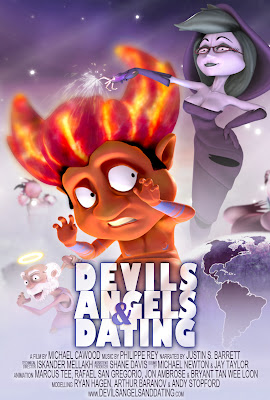
It was then that I started to make my short film, ‘
Devils, Angels and Dating’, largely as a way to showcase all of my new skills into something I could call my own. I already had dozens of student films from before my days as a professional animator but they were very dated, created with very old software and styles (I was originally trained as a 2D animator). So with hours and hours of screen time under my belt I set about creating my own all new film, ideally a one minute master piece.... Ha! Yeah right! I could never do
just a minute, I’m
way to ambitious for that and at the time I just had too much pent up creative energy. I knew then and now that a minute was enough and would have been a smarter choice but it was like trying to contain a raging bull. I had a lot to say and too many skills to show off.
So after a couple of years of story and character design development, I had to get started. I started with thumbnail storyboards. I scanned them in and edited them together. This went back and forth for a while as the rest of the production took shape over at the development website with our growing team of volunteers. I actually published most of these edits to the web so that; 1) the team could see how it was shaping up, 2) I could get feedback, 3) attract talent and, 4) an audience. In all there were around a
hundred or so versions of the animatic on YouTube that you can still to this day review to see how the film developed. This is one of the earliest animatics.
I was given filmmaking notes as I went along, but for the most part I was leaning on my own layout and staging experience leading up to this point. Acting as the principle artist, generalist and director of a film while also having a day job and having a life is an enormous strain. So I tried to find other people to help with Layout to get things into going faster (I had more animation volunteers than I could keep fed with shots). It was clear that I couldn’t get the animators to just create shots from storyboards, the results would have been extremely varied and the project would have been a nightmare. I did get some help from my good friend Kurt Lawson, with whom I spent some long work sessions side by side churning out shots in 3D. But in the end I had to do most of it, as for most people in this industry it’s not a task many people want spend their free time doing. So it became an ongoing task to keep a good number of shots prepared ahead of the wave of animators wanting to work on the film. It was also beneficial for me to handle most of the shots because I could keep a tight handle on the way the shots cut together and the way the camera movement flowed across the cut. Taking this task back myself had another unanticipated but very important benefit.
Any production is filled with people from different backgrounds, and wildly different levels of quality. Wrangling all those differences is challenging enough, but when you’re making something with nothing but volunteers (from all over the world) with no budget the variation goes off the chart. This is where most volunteer animated short film productions crumble and disappear.
So Layout and Final Layout came to the rescue and formed what I like to call the ‘sandwich of the production’. If animation is the content of the sandwich, the part you came for, then Layout and Final Layout are the slices of bread either side of it that holds it all together and makes it solid consumable product.
Layout is often referred to as a number of other names like Camera Staging, Previs, Setup and Workbook Layout. They are all variations around the same central 3D filmmaking problems to be solved. But in my case it essentially involved referencing in all the assets needed for a shot, staging their positions and broad movements through the scene while figuring out how the camera will frame them. The whole thing is playblasted out (animator talk for making a video) and saved as version one of the shot. The playblasts are put into the animatic replacing the storyboard panels. There will usually be a lot of back and forth re-iterations of each shot as the edit takes shape.
A long time ago I started keeping the edit open in the background as I work out the shots in 3D, and I’d just keep replacing the playblast videos and updating the timeline to get a fast turnaround. I still, to this day, don’t see enough of that being done on most productions and the lag between seeing a shot in 3D and seeing it in the edit can be excruciating to me. Anyway, for me it was a very efficient workflow and in time I filled up folders with scene files ready for animators to take over. This left little to chance, they couldn’t use the wrong assets, import it instead of referencing it or use the wrong part of the set, etc... Ultimately, along with the shot briefing and the animatic the animators had the vast majority of their questions answered for them and they could focus on the performances.
When the animators were done with the scene and it came back it was almost never ready to light and render. Each animator had a different level and style of polish, so animation did need some tweaks to keep it consistent and up to the same standards. But a 3D scene is so complex there’s also a huge number of things an animator can do that’s different from the next guy and it was necessary to check each scene over and make sure they all worked in the same way for the lighting and rendering pipeline.
The best perk of taking the shots back in for a final check-up was the ability to refine the camera based on the performance and any new shots that were completing either side of it. I could take a higher level look at each shot in the context of the edit and paint in broad strokes the style of the camera. I almost never changed the point of view of the camera, since that affects the performance too much and that was always locked down before the animator started. But I could push in a little, pull back a little, reframe the composition a bit or add camera shake and wobble. I actually designed a gradual flowing change of style of the camera work throughout the film to match the mood of the film. This is something that dozens of individuals focused exclusively on one shot each just can’t really co-ordinate. So it acted as a unifying process both artistically and technically. If anything I wish I could have been more ambitious with the camera work but at the time I was fighting a balancing act of making sure everyone could understand the production so that I could attract good talent, so I kept things simple.
I’d recommend the ‘Layout Sandwich’ practice to any animated film production, but I’ve seen firsthand how often it doesn’t work like this. Storyboards are rushed or skipped entirely. Projects are under too much pressure to finish yesterday, with too few people putting enough time into each step, or simply a lack of people with the Layout skillset being stretched too far. Work gets done, and then sent back to be re-done when it doesn’t work... but that’s another story.
So what’s the take away from all this? Layout is so much more than the poor animator’s fall back job. It’s pivotal to a production. I find myself more often than animating, creating and re-working sequences of shots because that’s where I’m needed the most. I tip my hats to the unsung heroes toiling away in studios around the world generating many iterations of shots most people will never see, so that both the audiences, and the animators, can understand a sequence. It’s a high art into itself, and solves so many problems. It takes a really specific skillset, while still understanding a broad number of factors to get it right. It’s one of the main balancing acts that holds animated productions together.
What are your Layout/Camera/Staging/Previs stories? I’m curious to learn more from the unsung heroes of the animated filmmaking world.